How to Calculate the Total Cost of Imported Range Hood Motors
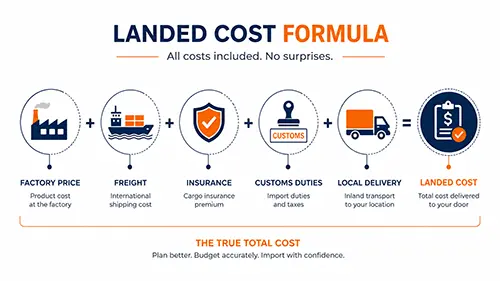
For OEM procurement managers and appliance supply chain directors, negotiating the per-unit price of a centrifugal blower is only the first step in the sourcing process. The actual financial impact on your manufacturing budget is determined by the landed cost—the total price of the motor once it arrives at your factory door.
Miscalculating wholesale hood motor shipping expenses, ignoring import tariffs, or relying on third-party brokers can quickly erode profit margins. A motor that appears inexpensive on a factory quotation can become financially unviable if pallet optimization is poor or if the supplier lacks the proper international export certifications.
This guide provides a structured, B2B calculation framework to help procurement teams accurately forecast the total landed cost of imported range hood motors, ensuring stable pricing and predictable supply chains. Before you calculate, you can browse our full range hood motor catalog to see current models and specifications.
What is the True Range Hood Motor Landed Cost?
The range hood motor landed cost is the absolute total expense incurred to purchase, transport, insure, clear through customs, and deliver a wholesale order of motors to the buyer’s destination facility.
Unlike a simple factory invoice, the landed cost accounts for the entire logistical journey. Accurately calculating this metric is critical for OEM manufacturers to establish correct retail pricing for their final range hood appliances and to evaluate whether a specific supplier is truly cost-effective.
4 Key Components of OEM Motor Landed Costs
To accurately forecast your B2B motor freight costs, supply chain managers must break down the procurement process into four distinct financial pillars.
1. Factory Base Price and Incoterms (FOB vs. CIF)
The foundational metric is the unit price negotiated with the manufacturer, but this number is meaningless without an agreed-upon Incoterm (International Commercial Term).
- FOB (Free on Board): The factory covers the cost to produce the motors and load them onto the vessel at the port of origin. The buyer assumes all shipping costs and risks from that point forward.
- CIF (Cost, Insurance, Freight): The factory pays for the production, ocean freight, and transit insurance to the buyer’s destination port.
Engineering Tip: Ensure the factory base price includes robust packaging. Electro NASA’s motors feature weld-less galvanized steel and heavy-duty plastics that are less prone to transit damage, but proper palletization is required to prevent shifted loads during ocean transit.
2. Freight, Logistics, and Volumetric Optimization
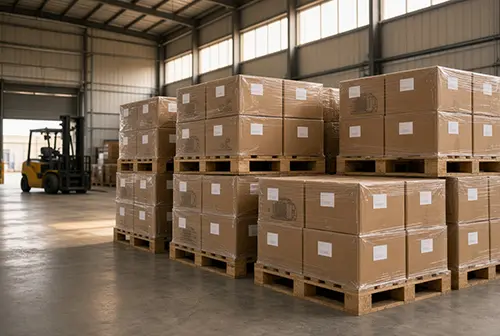
Shipping centrifugal motors involves calculating both actual weight (due to heavy copper windings and stators) and volumetric weight. The cost per unit drops significantly when buyers maximize container space.
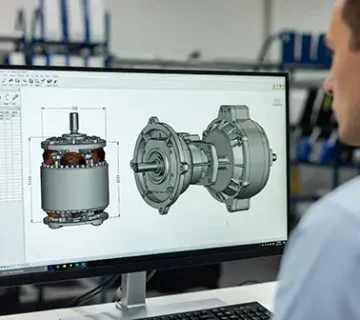
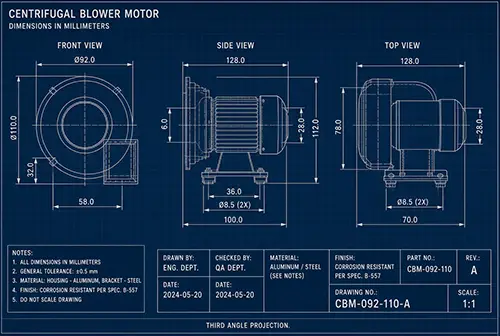
Procurement managers must request precise dimensional CAD files from the manufacturer to calculate how many K30 series heavy-duty exhaust fan motors or Turbo series motors can fit onto standard pallets within 20-foot or 40-foot High Cube containers.
3. Import Duties, Tariffs, and Customs Clearance
Range hood motor import duties vary drastically depending on your country’s trade agreements and the specific Harmonized System (HS) code used for electric centrifugal blowers. Furthermore, customs agencies will hold shipments that lack proper documentation.
Sourcing from a manufacturer with verified CE Mark and ISO 9001:2015 certifications prevents costly customs delays, storage fees, and compliance penalties at the border. Knowing how to evaluate a range hood motor supplier before you commit to a bulk order protects you from this risk entirely.
4. Hidden Costs: Broker Margins and Transit Insurance
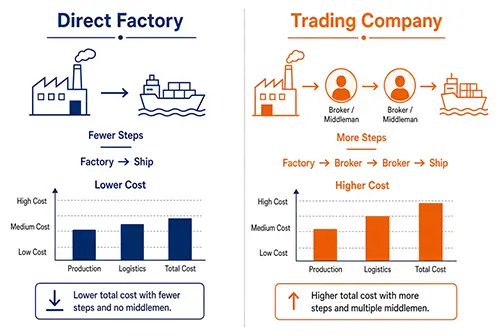
Working with a trading company instead of a direct factory introduces hidden broker margins into the base price. Additionally, buyers must account for transit insurance. While motor failure during shipping is rare with premium packaging, the financial risk of a lost or damaged container necessitates comprehensive cargo insurance.
Landed Cost Calculation Matrix
Use the following framework to map out the financial variables when evaluating an international OEM blower motor manufacturer.
| Cost Component | Calculation Factor | Responsibility (Assuming FOB Terms) |
|---|---|---|
| Unit Product Cost | (Unit Price × Quantity) + Custom PCB/Winding upgrades | Buyer pays Manufacturer |
| Origin Logistics | Factory to Port transit + Origin terminal handling charges | Manufacturer pays (Included in FOB) |
| Ocean/Air Freight | Cost of 20ft/40ft container + Fuel surcharges | Buyer pays Freight Forwarder |
| Customs & Tariffs | (Total Invoice Value + Freight) × HS Code Tariff Percentage | Buyer pays Customs Agency |
| Destination Logistics | Port unloading + Trucking to OEM assembly facility | Buyer pays Local Logistics |
How Direct Factory Sourcing Reduces Total Import Costs
Sourcing motors directly from a primary industrial manufacturer like Nam Avarane Sanaye Arvin Co. (Electro NASA) provides distinct financial advantages over utilizing third-party trading companies — see our full criteria for a wholesale hood motor manufacturer for the complete evaluation checklist.
Established in 1999, Electro NASA routinely exports over 30% of its production capacity. This deep export experience means the factory has already optimized pallet dimensions for standard shipping containers, maximizing unit density to lower your freight cost per motor. Furthermore, direct factory sourcing eliminates the hidden markups applied by brokers, ensuring your procurement budget goes entirely toward high-quality engineering—such as Class 180/200 thermal insulation and precision dynamic balancing—rather than middleman fees.
Best Practices for Planning International Motor Shipments
- Request Volumetric Data Early: Do not estimate shipping costs. Demand precise carton dimensions and weight metrics during the RFQ phase to get accurate quotes from your freight forwarder.
- Verify HS Codes: Ensure your customs broker and the manufacturer agree on the exact HS code for AC centrifugal blowers to avoid unexpected tariff reclassifications at the border.
- Consolidate Orders: To dilute the impact of flat-rate port fees and customs clearance charges, order in volumes that fill entire shipping containers (FCL) rather than utilizing Less than Container Load (LCL) shipping.
Frequently Asked Questions
How do Incoterms affect the landed cost of range hood motors? Incoterms dictate exactly who pays for shipping, insurance, and unloading at various stages of transit. While the final landed cost may be similar, purchasing under FOB terms gives the OEM buyer total control over selecting their own freight forwarders and negotiating shipping rates, whereas CIF leaves those choices to the manufacturer.
What causes customs delays when importing OEM blowers? Delays are typically caused by missing or unverified compliance documentation. Sourcing from a factory with recognized ISO 9001:2015 and CE Mark documentation ensures smooth clearance. Undocumented motors from generic trading companies frequently face quarantine or rejection.
Can we optimize shipping costs by altering the motor’s design? Yes. If your appliance allows for it, selecting a model with a needle-flame standard fire-retardant plastic volute reduces the overall weight of the shipment compared to heavy galvanized metal housings, potentially lowering freight costs on weight-restricted shipping routes.
How does container size impact the landed cost per motor? Shipping via a 40-foot High Cube container generally offers a lower cost-per-cubic-meter than a standard 20-foot container. Purchasing enough minimum order quantities to fill a 40-foot container distributes the flat-rate port and customs fees across a larger number of units, significantly reducing the per-unit landed cost.
Call to Action
Take control of your procurement budget with direct factory pricing. Request an OEM Quotation & Production Lead Time today for transparent FOB or CIF volume pricing.
Need assistance matching your motor specifications to your appliance’s price point? Consult with Electro NASA Technical Sales Engineers to explore our highly adaptable K30 and Turbo series.