What MOQ Should You Expect When Buying Range Hood Motors?
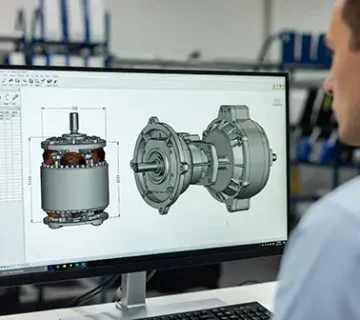
For OEM procurement managers and supply chain directors, negotiating the Minimum Order Quantity (MOQ) is a critical step in securing a reliable supply of range hood motors. Sourcing centrifugal blowers is not a purely transactional process; it is an engineering partnership. Understanding how factories calculate their MOQs allows buyers to optimize cash flow, forecast inventory, and ensure uninterrupted assembly lines.
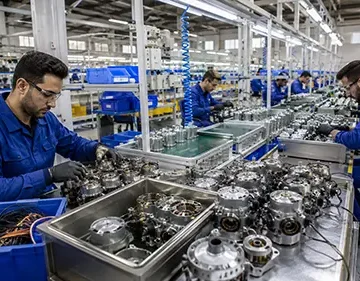
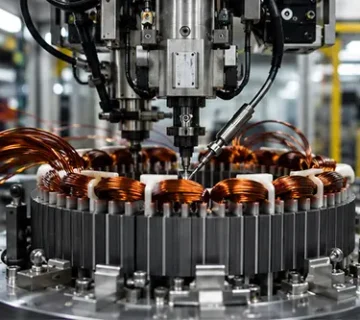
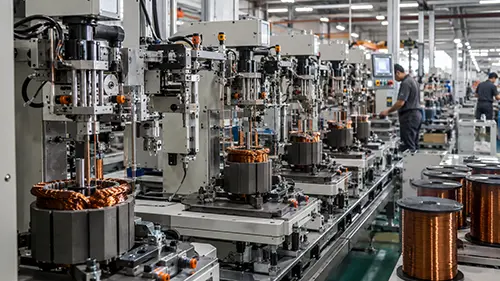
MOQ policies in the HVAC and appliance motor industry vary significantly. While a third-party trading company might offer deceptively low minimums by pulling from mixed, unverified stock, primary industrial manufacturers require specific volume thresholds to initiate automated assembly, custom copper winding, and rigorous batch testing.
This guide breaks down the engineering and logistical factors that dictate range hood motor MOQs and provides a framework for planning your bulk orders effectively.
For buyers looking to source bulk order range hood motors, understanding MOQ requirements is essential for planning procurement volumes, managing inventory, and establishing a reliable supply relationship with the manufacturer.
Understanding Minimum Order Quantity (MOQ) in Motor Manufacturing
In industrial manufacturing, MOQ is the minimum number of units a factory is willing to produce or sell in a single production run. For range hood motors, this threshold is heavily influenced by the cost of resetting assembly line machinery, recalibrating dynamic balancing equipment, and sourcing raw materials like electrical steel, copper, and fire-retardant polymers.
When a manufacturer like Nam Avarane Sanaye Arvin Co. (Electro NASA) sets a production schedule, high volume ensures that strict ISO 9001:2015 quality management standards and quality control measures—such as dielectric withstand testing (Hi-Pot) and acoustic chamber mapping—can be applied consistently across the entire batch without inflating the per-unit cost.
4 Factors That Determine Range Hood Motor MOQs
When consulting with an OEM blower motor manufacturer, expect the required MOQ to fluctuate based on the level of customization required for your appliances.
1.Custom Electrical Architecture and PCB Mapping
Standard 3-speed motors generally carry lower MOQs because they utilize universal winding patterns. However, modern premium range hoods often feature capacitive touch panels or smart home integrations. Requesting a custom 1-to-8 speed single-phase AC configuration requires the factory to reprogram automated copper winding machines. This custom electrical mapping inherently increases the MOQ to absorb the setup time.
2.Housing Material Specifications
The materials used for the motor volute directly impact production minimums:
Fire-Retardant Plastics: Injection molding requires specific heating and cooling cycles.Producing K30 models with needle-flame standard fire-retardant plastics requires continuous batch runs to maintain polymer integrity, leading to standard industrial MOQs.
Galvanized Metal: Models like the Turbo 2113 utilize a specialized weld-less and rivet-less galvanized steel assembly. Sourcing the specific anti-corrosive metal and calibrating the interlocking machinery requires substantial volume commitment.
3.Aerodynamic Adjustments (Impeller Types)
Switching between a forward-curved impeller (for compact, high-volume extraction) and a backward-curved impeller (for high static pressure in long ducts) changes the physical footprint of the rotor. Factories must adjust their precision dynamic balancing equipment for each specific impeller type.
4.Thermodynamic Insulation Upgrades
If your prosumer range hoods require continuous heavy-duty extraction over high-BTU gas ranges, upgrading to Class 180 or Class 200 thermal insulation is mandatory to prevent coil burnout. Applying these advanced thermal varnishes and integrating auto-resetting thermal protectors requires dedicated production lines, which may dictate a higher minimum order compared to standard Class 130 motors.
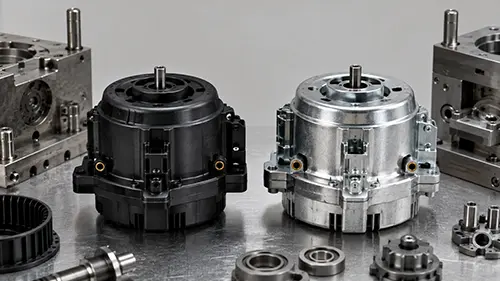
Standard Industry MOQ Tiers for OEM Blowers
Procurement teams should understand the difference between standard and customized bulk orders. The table below outlines typical B2B industry expectations when sourcing wholesale extractor fan motors.
| Order Type | Typical Industry MOQ Expectation | Production Lead Time Impact | Ideal Application |
| Standard “Off-the-Shelf” | Low to Moderate | Short | Standard replacement parts or entry-level hoods. |
| Custom Speed/PCB Mapping | Moderate to High | Medium | Smart appliances requiring 1-to-8 variable speeds. |
| Custom Material (Weld-less Metal) | High | Medium to Long | Premium “silent” hoods or coastal environment units. |
| Extreme Duty (Class 200 Insulation) | High | Medium | Commercial kitchens and heavy-duty prosumer models. |
Engineering Tip: If your required MOQ is lower than the factory’s minimum for a highly customized motor, ask if you can standardize the physical chassis (e.g., using the same weld-less galvanized housing) while only customizing the capacitor-less wiring setup. Simplifying physical tooling often allows factories to be more flexible with volume requirements.
The Prototype Validation Process Before Bulk Orders
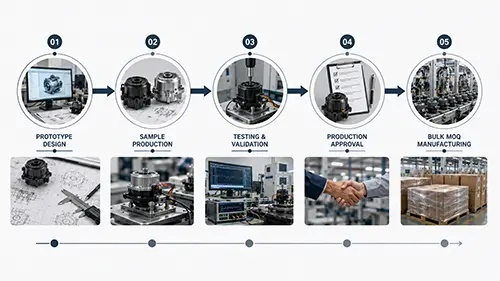
Reliable motor factories do not expect OEMs to place a 5,000-unit order blindly. The procurement workflow should always include a prototype validation phase.
- Engineering Consultation: Submit your hood’s dimensional constraints, desired CFM (m³/h), and electrical schematic to the manufacturer.
- Prototype Development: The factory produces a small batch of prototypes engineered to your exact specifications.
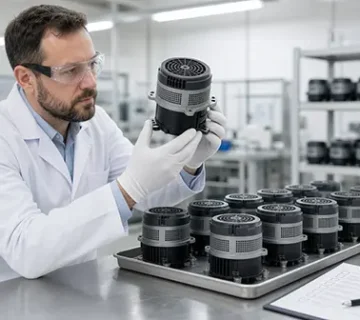
- In-House Testing: Your R&D team subjects the prototypes to airflow resistance, thermal load, and acoustic resonance tests
- Bulk Order Authorization: Once the engineering team signs off, procurement commits to the agreed-upon MOQ for mass production.
Trading Companies vs. Direct Factories: The MOQ Difference
OEM buyers often face a choice between trading companies (brokers) and primary industrial manufacturers.
Trading companies may lure buyers with “No MOQ” policies. However, they achieve this by liquidating leftover, unverified inventory from multiple subcontractors. This results in inconsistent thermal ratings, mismatched acoustic profiles, and non-existent warranty support.
A primary industrial manufacturer like Electro NASA requires an MOQ because they are building components specifically for your assembly line. This guarantees that every unit in the container shares the exact same dynamic balancing, Class 180/200 insulation standards, and CE compliance. This guarantees that every unit in the container shares the exact same dynamic balancing, Class 180/200 insulation standards, and CE compliance.
Best Practices for Negotiating Motor Factory MOQ Policies
- Forecast Accurately: Provide the manufacturer with your annual projected volume, not just the initial order size. Factories are often willing to produce smaller initial batches if they are secured by a long-term supply agreement.
- Consolidate SKUs: Instead of ordering three different motor models for different hoods, utilize a highly adaptable motor—like a single-phase AC unit with 1-to-8 speed control—and use software on your appliance PCB to limit speeds for lower-tier models. This consolidates your inventory into one high-volume SKU.
FAQ
Q1: Why do custom speed configurations require higher MOQs?
Automated copper winding machines must be specifically programmed for multi-speed taps (e.g., 1-to-8 speeds). The labor and downtime required to recalibrate the machinery for custom electrical architectures necessitate a higher minimum volume to remain cost-effective for the factory.
Q2: Can we bypass the MOQ by purchasing motors directly from a broker?
While brokers may offer lower MOQs, they cannot guarantee batch consistency. Range hood motors sourced this way often suffer from varying vibration levels and thermal insulation grades, leading to high warranty claim rates and potential fire safety compliance issues for the OEM.
Q3: Does Electro NASA offer prototype testing before we commit to a bulk order?
Yes. As a primary industrial manufacturer, we work closely with OEM R&D teams to provide precise prototypes. This allows your engineers to map the motor to your proprietary PCB and validate acoustic performance before committing to wholesale production volumes.
Q4: How does container shipping affect bulk order volumes?
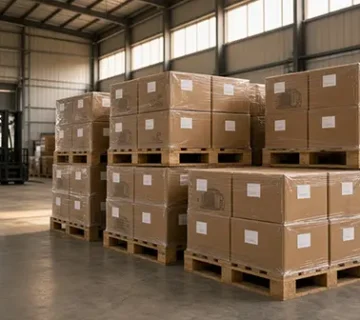
International logistics heavily influence practical MOQs. Procurement managers often align their motor order quantities with the maximum capacity of a 20-foot or 40-foot shipping container to optimize the landed cost per unit and maximize freight efficiency.
Ready to secure a stable supply chain for your appliance manufacturing? Request an OEM Quotation & Production Lead Time to discuss MOQ tiers and pricing for bulk orders.