
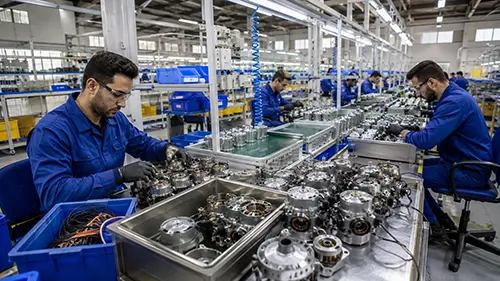
How to Evaluate a Range Hood Motor Supplier Before Placing a Bulk Order
A proper range hood motor supplier evaluation requires moving beyond generic price sheets. For OEM procurement managers and R&D engineers, selecting a centrifugal blower partner is a critical engineering decision that directly impacts the final appliance’s lifespan, acoustic performance, and warranty claim rates.
Procuring bulk range hood motor supplies from unreliable vendors often results in inconsistent batch quality, thermal coil burnout, and localized rust in exhaust systems. To protect your brand’s reputation and ensure supply chain stability, buyers must evaluate manufacturers based on strict fluid dynamic capabilities, thermodynamic resilience, and audited quality control protocols.
This guide provides a comprehensive, engineering-focused framework to help you evaluate and select a reliable bulk range hood motor supplier for high-volume component sourcing.
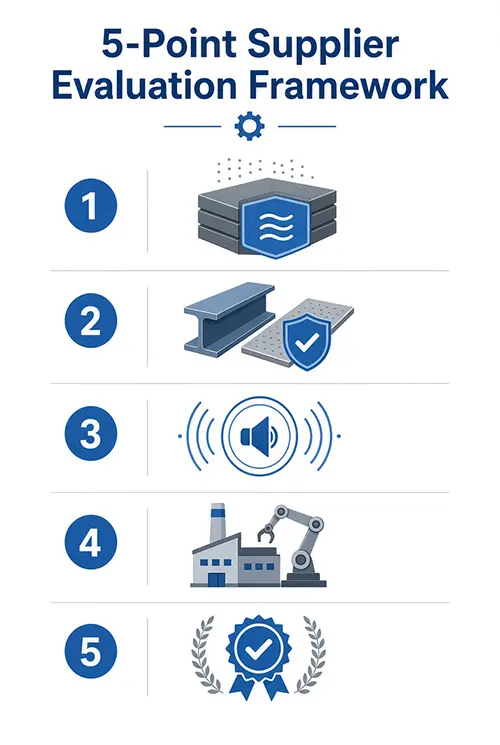
The 5-Point OEM Supplier Evaluation Framework
Before initiating a Request for Quotation (RFQ), procurement teams should run potential suppliers through a stringent evaluation process. A highly reliable industrial manufacturer will seamlessly meet the following five criteria:
- Thermodynamic Resilience: Verification of Class 180 or Class 200 winding insulation to prevent continuous-duty coil burnout.
- Material Integrity: Use of weld-less galvanized steel or needle-flame standard fire-retardant plastics.
- Acoustic Engineering: Proof of precision dynamic balancing to eliminate metallic resonance.
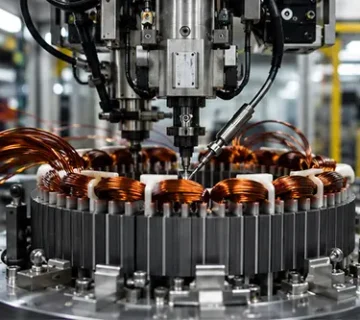
- Production Consistency: Full control over in-house injection molding, copper winding, and assembly.
- Industrial Compliance: Documented CE Marking and ISO 9001:2015 Quality Management Systems.

Evaluate Thermodynamic Standards: Class 180 and Class 200
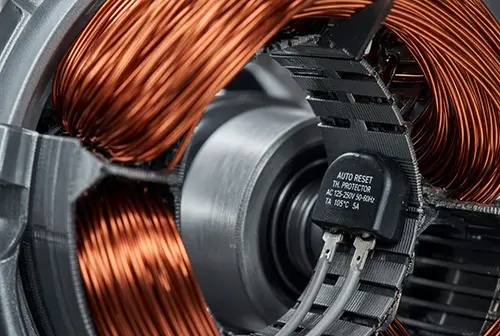
High-output prosumer gas ranges subject ventilation motors to intense, continuous thermal loads. A common failure point in budget bulk motors is the use of inferior Class 130 or Class 155 insulation, which rapidly degrades under high-heat operations.
When evaluating a supplier, demand industrial-grade thermodynamic protection. For instance, the Class 180 (Class H) and Class 200 insulation used in Electro NASA’s K30 Series heavy-duty exhaust fan motors ensures the copper windings can safely operate at extreme temperatures without thermal breakdown.
Engineering Tip: Always verify that the supplier integrates an auto-resetting in-line thermal protector. In the event of a severe ambient heat spike or temporary duct blockage, this component safely interrupts the circuit, preventing catastrophic motor failure and drastically reducing post-sale warranty claims.
Assess Mechanical Assembly and Material Integrity
The structural chassis of the centrifugal blower must survive years of exposure to grease, moisture, and variable static pressure. The material sourcing and assembly techniques of your supplier are vital.
Weld-Less Galvanized Steel for High-Humidity Exhausts
Standard spot-welding destroys the protective zinc coating on galvanized steel, creating immediate points of vulnerability where galvanic corrosion and rust initiate. Premium manufacturers utilize an interlocking, weld-less and rivet-less assembly technique. This preserves the structural and anti-corrosive integrity of the metal housing, making it ideal for coastal regions and high-humidity commercial kitchens.
Needle-Flame Compliant Plastics for Fire Safety
If your appliance architecture requires a lightweight or highly compact solution, plastic volutes are preferred. However, the supplier must prove that their polymers comply with international needle-flame testing standards. This fire-retardant material ensures complete combustion safety within enclosed cabinetry.
Verify Acoustic Engineering and Dynamic Balancing
Metallic motor housings are prone to severe acoustic resonance (rattling) if the internal rotor and impellers are even slightly imbalanced. Generic suppliers often rely on static balancing, which fails at high RPMs.
A qualified OEM partner must perform precision dynamic balancing on every unit. For example, the Turbo Series high-efficiency OEM blowers utilize dual-axis dynamic balancing for twin forward-curved impellers. This mitigates eccentric rotational forces entirely, yielding a “super-silent” operational footprint necessary for premium wide-canopy and island range hoods.
Audit Manufacturing Capacity and Supply Chain Stability
Evaluating the supplier’s organizational stability is just as critical as evaluating their engineering. A dependable partner operates a highly scalable manufacturing facility with documented international export capabilities.
Ask the supplier about their production history and capacity. Nam Avarane Sanaye Arvin Co. (Electro NASA), established in 1999, routinely exports over 30% of its production capacity. This proven logistical infrastructure guarantees predictable lead times and the financial stability required to fulfill long-term, high-volume global supply agreements.
Trading Companies vs. Direct Industrial Manufacturers
Sourcing specialized, high-static pressure blowers through third-party trading brokers exposes OEMs to significant logistical and engineering risks. Brokers often switch sub-contractors to maximize their margins, resulting in variable batch quality, fluctuating acoustic profiles, and incompatible mounting geometries.
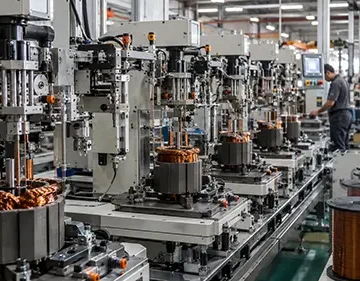
Partnering with a primary industrial manufacturer ensures absolute operational control over injection molding, winding, machining, and assembly lines. Direct factory sourcing provides procurement managers with consistent quality, rapid prototype support, and direct 24-month factory warranties.
Supplier Evaluation Matrix
Use the following matrix to compare standard market suppliers against a primary industrial manufacturer like Electro NASA.
| Evaluation Criteria | Primary Industrial Manufacturer (Electro NASA) | Standard Trading Company | Procurement Impact |
| Thermal Insulation | Class 180 / Class 200 | Class 130 / 155 | Prevents coil burnout during continuous heavy-duty cycles. |
| Assembly Method | Weld-less & Rivet-less | Spot-welded / Riveted | Eliminates rust propagation in high-humidity exhausts. |
| Acoustic Profiling | Precision Dynamic Balancing | Static Balancing | Prevents mechanical resonance and rattling in metal hoods. |
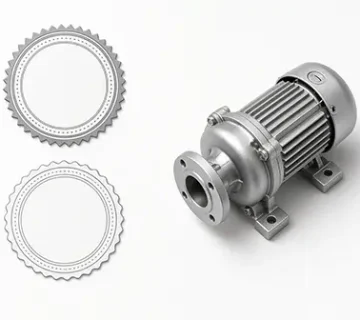
| Quality Compliance | ISO 9001:2015 & CE Mark | Inconsistent / Unverified | Ensures international export readiness and safety. |
| Electrical Architecture | Capacitor-less options available | Internal bulky capacitors | Frees up proprietary PCB space for appliance designers. |
Best Practices for Initiating a Bulk Motor Order
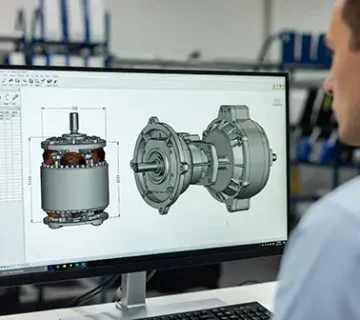
- Request Dimensional CAD Files: Before ordering samples, validate the motor’s physical footprint against your hood chassis limits.
- Define Fluid Dynamic Requirements: Specify if your appliances utilize long, restrictive exhaust ducts (requiring backward-curved impellers) or demand high volumetric airflow in compact spaces (requiring forward-curved impellers).
- Map PCB Integration: If utilizing capacitive touch panels, request an AC single-phase motor with a highly adaptable 1-to-8 speed matrix.
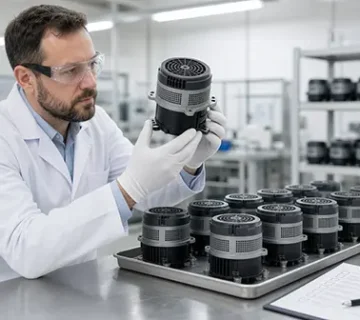
- Order QA Batch Samples: Subject the samples to dielectric withstand testing (Hi-Pot) and acoustic chamber validation in your own facilities.
FAQ
Q1: Why is ISO 9001:2015 certification important when selecting a motor supplier?
ISO 9001:2015 certification guarantees that the manufacturer operates under a strict, internationally audited Quality Management System. This ensures that unit number 10,000 will have the exact same dynamic balancing and thermal tolerances as unit number 1, eliminating batch inconsistencies.
Q2: Should OEM buyers choose metal or plastic motor housings for bulk orders?
The choice depends entirely on the application. Weld-less galvanized metal housings offer extreme structural rigidity and anti-corrosion for high-end or wide-canopy hoods. Needle-flame standard plastic housings provide a lightweight, space-saving footprint ideal for concealed, built-in, or telescopic cabinet hoods.
Q3: How does a capacitor-less motor design benefit our appliance assembly line?
By omitting the internal capacitor, the motor provides a cleaner electrical interface. This allows your electrical engineering team to integrate the capacitance requirements directly into the appliance’s main electronic PCB, saving internal chassis space and streamlining assembly line wiring.
Q4: How can we avoid supply chain delays when importing bulk range hood motors?
To mitigate delays, procure directly from an established industrial manufacturer rather than a broker. Look for factories with a dedicated export division, proven dual-frequency (50Hz/60Hz) manufacturing lines, and a history of maintaining long-term international supply agreements.
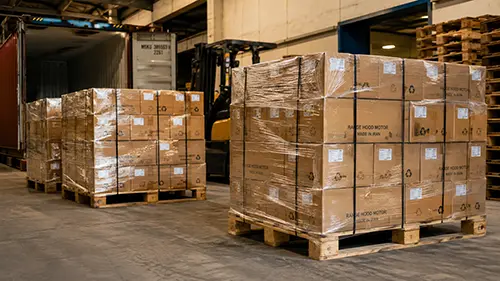
Secure your supply chain with premium, Class 200 centrifugal blowers. Request an OEM Quotation & Production Lead Time today to discuss high-volume pricing tiers.

No comment