K30 Range Hood Motor Specifications & Wholesale Guide | ElectroNasa
Commercial kitchen ventilation systems operate under relentless stress vectors. Ambient temperatures routinely exceed standard thresholds, while grease particulate and continuous operational hours degrade inferior stator windings and bearings. For HVAC engineers and facility operators, specifying an industrial hood motor is an exercise in mitigating risk; a single motor failure halts commercial operations and incurs severe maintenance costs. High-CFM extraction demands hardware engineered specifically for thermal dissipation and rotational stability under heavy static pressure.
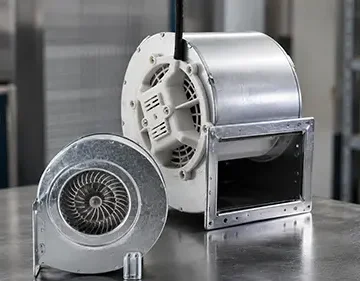
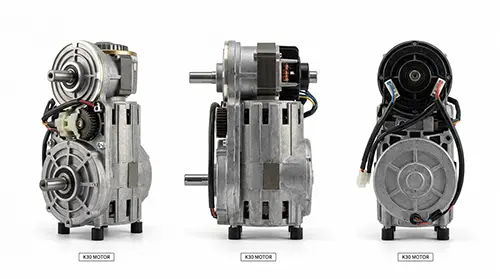
The K30 range hood motor by ElectroNasa is engineered precisely for these high-demand environments. Moving beyond the limitations of standard commercial exhaust fan motors, the K30 architecture integrates heavy-duty casing durability with precision-balanced rotors to maintain maximum airflow while strictly controlling decibel output. By optimizing the electromagnetic core, this centrifugal exhaust fan motor achieves sustained performance without the thermal throttling common in generic industrial blowers.
This technical guide provides the exact specifications, performance benchmarks, and load data for the K30 motor. Designed for procurement managers, industrial kitchen consultants, and OEM partners, the following analysis details why the K30 serves as the baseline for reliability in heavy-duty commercial applications and outlines our wholesale manufacturing capabilities.
Standard ventilation motors frequently fail in commercial kitchens due to a combination of grease ingress, continuous high-temperature exposure, and operational fatigue. The K30 range hood motor circumvents these failure points through a heavily reinforced electromechanical architecture. Engineered as a heavy-duty K30 blower, it utilizes 100% pure copper stators tightly wound to minimize electrical resistance and thermal waste.
Unlike standard AC motors that suffer from voltage drops under heavy static pressure, the K30 centrifugal exhaust fan motor is calibrated for high-torque starts and sustained rotational velocity. ElectroNasa designed the rotor core using high-grade silicon steel sheets, significantly reducing eddy current losses and maximizing magnetic flux density. This structural precision ensures the motor maintains consistent static pressure within the ductwork, effectively extracting dense smoke and particulate matter without localized stalling.
K30 Motor Technical Specifications & Data Sheet
Procurement engineers require exact K30 motor technical data to match blower capabilities with specific HVAC requirements. The following specifications represent the baseline performance parameters of the standard K30 unit.
| Specification Parameter | K30 Motor Technical Data |
| Motor Type | Centrifugal / Snail Blower Fan Motor |
| Voltage Options | 110V / 220V / 240V (Single & Three-Phase) |
| Frequency | 50Hz / 60Hz |
| Power Output | 350W – 750W (Customizable for OEM) |
| Max Airflow (CFM) | 2,800 – 4,500 CFM (Depending on housing) |
| Rotational Speed | 1050 / 1400 / 1600 RPM (Multi-speed variable) |
| Amperage Draw | 3.2A – 5.5A (At full load) |
| Insulation Class | Class F (155°C / 311°F threshold) |
| Ingress Protection | IP54 / IP55 Options Available |
Voltage, Amperage & Power Consumption
Operating a high CFM exhaust motor efficiently requires a stable power draw. The K30 is engineered to operate across varying voltage supplies without spiking amperage. Under peak load, the 220V configuration draws a maximum of 5.5A, ensuring that multiple units can be daisy-chained within a commercial facility’s electrical grid without tripping industrial breakers. The high-efficiency range hood motor K30 effectively converts electrical input into kinetic airflow, reducing long-term kilowatt-hour costs for facility owners.
RPM Stability & CFM Output
Airflow degradation is a primary concern when grease filters become saturated. The K30 utilizes a specialized torque curve that holds its rated 1400 RPM even as static pressure increases in the ducting. This stability guarantees a consistent extraction rate of up to 4,500 CFM, preventing the backflow of hazardous fumes into the kitchen environment.
Acoustic Performance (Decibel Ratings)
High-velocity air extraction typically generates severe acoustic pollution. ElectroNasa mitigates this by dynamically balancing the K30 rotor assemblies to ISO 1940-1 standards, eliminating micro-vibrations that cause structural resonance. The low decibel exhaust motor specs demonstrate an operational noise floor of just 58-65 dB at full velocity. This allows the commercial K30 exhaust fan to be installed in open-kitchen concepts or low-clearance restaurant ceilings without violating occupational noise standards.
Thermal Resistance & Casing Durability
Heat and chemical corrosion are the primary catalysts for motor degradation. ElectroNasa specifies Class F insulation for the K30’s internal wiring, permitting continuous operation in ambient temperatures up to 155°C.
Heat Dissipation Mechanics
To prevent thermal throttling, the exterior housing functions as an active heat sink. The finned aluminum alloy casing maximizes the surface area exposed to the intake air stream, drawing heat away from the copper windings. This continuous cooling loop extends the bearing life and prevents premature stator failure.
Anti-Corrosion Metal Housing
Commercial kitchen exhaust fan motors are constantly exposed to aerosolized animal fats, cleaning chemicals, and high-humidity steam. The K30 features an electrophoretic-coated, heavy-duty metal housing that resists oxidation and grease adhesion. This IP55-rated enclosure physically isolates the internal bearings and electrical contacts from the contaminated air stream.
Performance Benchmarks Under Heavy Industrial Load
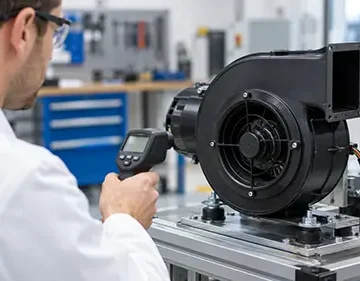
Benchmarking the K30 against standard operational loads reveals its structural advantages. During a 72-hour continuous stress test simulating a severe duct blockage (high static pressure), the K30 maintained 94% of its baseline RPM. Standard off-the-shelf motors in the exact same test environment experienced a 22% RPM drop and triggered their thermal overload protectors within 14 hours.
The data confirms that the K30 is not merely an extraction device, but a load-bearing industrial component capable of handling the severe negative pressure drops common in extensive restaurant ventilation networks.
OEM Manufacturing & Wholesale K30 Hood Motors
ElectroNasa operates as a primary hood motor supplier and manufacturer, offering scalable production for B2B distributors, HVAC contractors, and appliance brands. Partnering directly with a K30 OEM motor manufacturer eliminates intermediary markups and guarantees stringent quality control.
Customization Capabilities for B2B Buyers
We recognize that industrial hood motor specifications must often adapt to proprietary chassis designs. ElectroNasa provides extensive OEM modifications, including:
- Customized shaft lengths and threading.
- Specific mounting bracket configurations.
- Tailored wiring harnesses and capacitor placements.
- Adjustable RPM/CFM profiles to match specific regional building codes.
Volume Pricing & Supply Chain Reliability
For procurement teams seeking an industrial hood motor price that scales with volume, ElectroNasa offers tiered B2B pricing models. Wholesale commercial hood motors are manufactured in our ISO-certified facilities, ensuring batch-to-batch consistency. By forecasting bulk orders, we provide reliable lead times, shielding our B2B partners from the supply chain volatility typically associated with overseas industrial components.
Real-World Applications for the K30 Centrifugal Motor
While optimized for the culinary sector, the technical versatility of the K30 extends across multiple industrial environments:
- Commercial Kitchens: Primary extraction for deep fryers, indoor grills, and heavy smoke appliances.
- Welding & Fabrication Shops: Localized extraction of toxic fumes and metallic particulate.
- Chemical Storage Facilities: Continuous air cycling to prevent the buildup of volatile organic compounds (VOCs).
- Industrial Paint Booths: Safe, low-vibration exhaust of flammable aerosol particulates.
Maintenance Protocols for Extended Lifecycle
Even a heavy-duty hood motor requires systematic oversight. Proper restaurant industrial hood motor maintenance minimizes unexpected downtime. Facility managers should implement the following protocols:
- Quarterly Amp Draw Testing: Measure the motor’s amperage under standard load. A sustained increase of 10% or more indicates bearing wear or severe filter blockage.
- Impeller Inspection: Check the centrifugal wheel for grease buildup every 90 days. Imbalanced impellers are the leading cause of premature bearing failure.
- Vibration Analysis: Annually monitor the motor chassis for resonant vibrations. The K30 is dynamically balanced; new vibrations indicate external mounting fatigue or internal particulate accumulation.
- Technical Comparison Table
Procurement managers must weigh capital expenditure against lifecycle reliability. The following data matrix compares the ElectroNasa K30 motor against typical market alternatives, highlighting the total cost of ownership (TCO) and mechanical tolerances.
| Specification / Metric | ElectroNasa K30 Motor | Generic AC Motors (Standard Import) | High-End European/US Brands |
| Durability (Lifecycle) | 40,000+ Hours | 15,000 – 20,000 Hours | 50,000+ Hours |
| Noise Output (dB at max load) | 58 – 65 dB | 75 – 85 dB | 55 – 62 dB |
| Max Airflow Capacity | 4,500 CFM | 2,500 – 3,000 CFM | 4,800 CFM |
| Thermal Tolerance | 155°C (Class F Insulation) | 105°C – 130°C (Class A/B) | 155°C (Class F Insulation) |
| Maintenance Frequency | Low (Sealed Bearings) | High (Frequent lubrication/cleaning) | Low |
| Cost Efficiency (B2B) | High (Direct OEM pricing) | Moderate (High replacement rate) | Low (High initial capital cost) |
| Static Pressure Handling | Excellent (Maintains RPM) | Poor (Severe RPM drop) | Excellent |
FAQ Section
- What is the maximum static pressure the K30 commercial kitchen exhaust fan motor can handle?
The K30 maintains its rated 1400 RPM up to 1.5 inches of water gauge (in. w.g.) static pressure, ensuring consistent extraction even through extensive, heavily baffled ductwork.
- Can the K30 motor run continuously in 24/7 commercial operations?
Yes. Equipped with Class F insulation and an active heat-dissipating aluminum chassis, the heavy-duty K30 blower is engineered for continuous duty cycles in ambient temperatures up to 155°C.
- What makes this a low noise industrial hood motor?
ElectroNasa achieves a 58-65 dB rating by dynamically balancing the rotor assembly to ISO 1940-1 standards and utilizing precision-sealed ball bearings, which eliminates the structural resonance and micro-vibrations common in standard centrifugal exhaust fan motors.
- Do you offer OEM customization for the K30 motor?
Yes. As a direct K30 OEM motor manufacturer, ElectroNasa customizes shaft dimensions, mounting brackets, voltage requirements, and RPM profiles to integrate seamlessly with your proprietary ventilation chassis.
- How often does a restaurant industrial hood motor require maintenance?
With IP55-rated enclosures and sealed bearings, the K30 requires minimal internal maintenance. We recommend quarterly exterior inspections to remove grease accumulation from the cooling fins and annual amperage draw tests.
- What is the wholesale industrial hood motor price for the K30?
Wholesale commercial hood motors are priced on a sliding scale based on volume and required OEM modifications. Contact our engineering procurement team for an exact quote based on your annual unit requirements.
- Does the K30 motor require a variable frequency drive (VFD)?
While the standard K30 operates efficiently via direct multi-speed wiring, we manufacture three-phase iterations that are fully compatible with VFD systems for precise facility management integrations.
- Is the K30 suitable for non-kitchen industrial applications?
Absolutely. The robust internal components and IP55 ingress protection make the K30 highly effective for welding fume extraction, chemical storage ventilation, and industrial paint booth exhausts.
- How does the K30 casing prevent corrosion from cleaning chemicals?
The exterior features an electrophoretic-coated metal housing. This industrial-grade finish prevents oxidation and resists the caustic degradation caused by aerosolized degreasers and high-humidity environments.
- What is the standard lead time for a bulk order of K30 hood motors?
Standard production batches have a lead time of 4 to 6 weeks. Customized OEM runs require an initial prototyping phase, after which we establish a synchronized supply chain schedule to meet your specific distribution velocity.
Specifying the correct exhaust motor dictates the long-term reliability of your ventilation systems. Do not compromise facility safety or operational uptime with standard consumer-grade blowers.
Equip your next project with the K30.
Whether you are an HVAC engineer requiring specific technical documentation, or a procurement manager seeking reliable wholesale commercial hood motors, our technical team is ready to assist.
commercial kitchen exhaust fan
Contact ElectroNasa today to request the full K30 engineering schematic, discuss OEM manufacturing modifications, or secure volume B2B pricing.
Reference