K30 Motor Voltage and Frequency Compatibility Guide
For OEM appliance manufacturers competing on a global scale, standardizing internal components is the key to supply chain efficiency. If an appliance brand exports range hoods to both Europe and specific regions in the Americas or the Middle East, their R&D engineers face a strict electrical mandate: the internal centrifugal blower must operate flawlessly across varying international power grids.
Miscalculating the K30 motor voltage frequency requirements leads to catastrophic field failures. A motor designed strictly for a 50Hz grid may spin too fast, rattle violently, and burn out within weeks when plugged into a 60Hz grid.
This technical guide breaks down the K30 electrical specifications, explaining the physics of dual-frequency AC motors, and how Electro NASA engineers the K30 series to serve as a globally compliant, single-SKU solution for export-driven appliance brands.
The Global Export Challenge for OEM Appliances
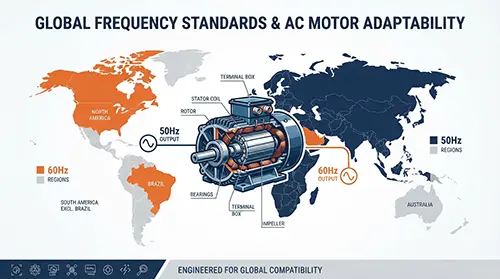
The global electrical landscape is divided. While the majority of Europe, Asia, and Africa utilize a 220V–240V / 50Hz standard, regions like North America, Saudi Arabia, Brazil, and parts of the Caribbean utilize 60Hz grids (often at varying voltages like 110V or 220V). Nominal grid voltages are defined in IEC 60038.
For an OEM, maintaining separate manufacturing lines and inventory for a “50Hz Range Hood” and a “60Hz Range Hood” doubles inventory holding costs and drastically complicates the R&D process. To streamline production, electrical engineers require a heavy-duty blower that is inherently dual-rated.
K30 Baseline Electrical Architecture: 220V–240V
The foundational electrical specification for the Electro NASA K30 series (including the heavy-duty 1113 and compact 3111 models) is an operating voltage of 220V to 240V AC.
Managing Voltage Fluctuations
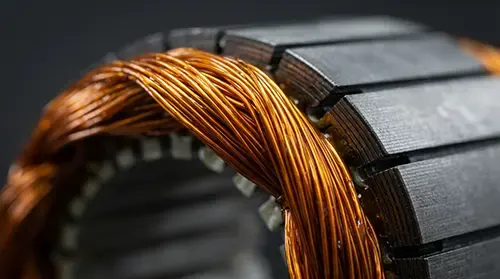
International power grids are rarely perfectly stable. A grid rated for 230V may frequently spike to 245V or dip to 210V during peak load hours. The K30’s copper stator windings are engineered to absorb these standard fluctuations without experiencing severe electrical slip or stalling. When the voltage drops, the motor relies on its high intrinsic torque to keep the backward-curved impeller spinning against duct resistance.
The Physics of Dual-Frequency (50Hz / 60Hz) Operation
The most critical engineering feature of the K30 series for export managers is its 50Hz / 60Hz dual-frequency compatibility. To understand why this is a premium engineering feat, OEMs must understand the physics of synchronous speed in AC single-phase induction motors.
The rotational speed (RPM) of an AC motor is directly determined by the frequency (Hz) of the electrical supply. The formula for synchronous speed (Ns) is:
Ns = (120 × Frequency) / Number of Poles
How 60Hz Alters Motor RPM and Airflow
Because 60Hz is 20% higher than 50Hz, a motor plugged into a 60Hz grid will naturally spin approximately 20% faster.
According to standard HVAC fan laws:
- A 20% increase in RPM results in a 20% increase in volumetric airflow (CFM).
- A 20% increase in RPM results in a 44% increase in static pressure capability.
- A 20% increase in RPM results in a 73% increase in electrical power consumption (Watts).
Why Standard Motors Burn Out on 60Hz Grids
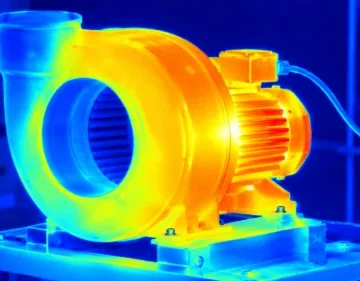
When generic, low-cost motors (designed only for 50Hz) are exported to 60Hz countries, that 73% spike in power consumption generates massive internal heat (I²R losses). Furthermore, the 20% increase in rotational speed creates severe kinetic vibration that the motor’s bearings and chassis were not balanced to handle. The result is rapid thermal burnout and catastrophic mechanical failure.
How the K30 Series Defeats 60Hz Thermal and Kinetic Stress
Electro NASA engineers the K30 series specifically to survive the exponential loads created by 60Hz grids, allowing OEMs to export a single appliance globally.
Class 180 (Class H) Insulation
To manage the 73% increase in power consumption and the resulting thermal load on a 60Hz grid, the K30’s copper coils are varnished with Class 180 insulation. This industrial-grade thermal protection guarantees the stator can operate continuously at temperatures up to 180°C without the enamel melting. Additionally, an auto-resetting thermal protector provides a failsafe against locked-rotor events.
High-Tolerance Dynamic Balancing
To handle the 20% increase in RPM, Electro NASA subjects every K30 impeller to high-tolerance precision dynamic balancing. The rotors are micro-calibrated to ensure that even at the elevated speeds of a 60Hz grid, the motor will not transfer eccentric kinetic vibration to the range hood canopy, preserving the appliance’s acoustic integrity.
OEM Strategy: The Single-SKU Export Advantage
By standardizing on a dual-frequency, 220V-240V centrifugal blower like the K30, appliance manufacturers unlock the Single-SKU Export Advantage.
Your R&D team only needs to design one physical hood chassis and one primary printed circuit board (PCB). Whether the final pallet of range hoods is shipping to a 50Hz market in Germany or a 60Hz market in Saudi Arabia, the internal mechanical and electrical architecture remains identical. This drastically simplifies CE Mark compliance testing, reduces warehousing overhead, and provides ultimate agility for your export sales teams.
Frequently Asked Questions
Do we need to change the capacitor when moving from a 50Hz to a 60Hz grid? Generally, no. The K30’s capacitor-less external architecture utilizes a run capacitor wired to your appliance PCB. As long as the capacitor is correctly sized by your electrical engineers during the initial R&D phase to accommodate the voltage and current draw of the K30, the same microfarad (µF) rating will function effectively across both 50Hz and 60Hz frequencies.
Will the range hood be louder on a 60Hz grid? Yes, slightly. Because the motor spins 20% faster on a 60Hz grid, it moves more air (higher CFM), which inherently creates slightly more aerodynamic noise (whooshing). However, because the K30 is dynamically balanced, you will not experience an increase in mechanical rattling or vibration.
Can the K30 operate on a 110V / 60Hz grid (like in the United States)? The standard K30 architecture discussed here is 220V-240V. While a 220V motor cannot be plugged directly into a standard 110V outlet without a transformer, many high-end prosumer range hoods in the US utilize dedicated 220V/240V circuits (similar to electric ovens). For specific 110V custom winding requests, OEM buyers should consult directly with Electro NASA engineering.
How does 1-to-8 speed PCB mapping work across different frequencies? Your custom PCB voltage-stepping logic remains the same. However, your R&D team must remember that “Speed 1” on a 60Hz grid will naturally be 20% faster than “Speed 1” on a 50Hz grid. The K30 will seamlessly accept the stepped-down voltage in either region.
Standardize your global appliance exports with a single, reliable motor. Request an OEM Quotation & Production Lead Time for the dual-frequency K30 series.
Need to verify if your appliance PCB can handle 60Hz rotational loads? Consult with Electro NASA Technical Sales Engineers for expert electrical mapping support.