OEM Hood Motor Manufacturing Process: From Design to Mass Production
For appliance brands, selecting the right OEM manufacturing partner is about more than finding a supplier. It means working with a company capable of transforming product requirements into reliable, production-ready hood motors while maintaining consistent quality, engineering support, and scalable manufacturing.
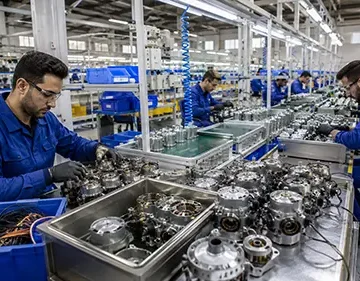
OEM hood motor manufacturing combines product engineering, material selection, precision manufacturing, quality control, and production planning into a structured process. Every stage influences motor efficiency, durability, noise level, and long-term reliability.
At Namavaran Sanaye Arvin (ElectroNasa), OEM manufacturing is supported by in-house engineering, dedicated production facilities, and quality control processes for kitchen hood motor production. The company develops customized solutions for appliance manufacturers requiring private-label or application-specific motor designs based on verified customer requirements.
What is OEM hood motor manufacturing?
OEM hood motor manufacturing is the process of designing, engineering, producing, testing, and supplying electric motors that are manufactured according to another company’s product specifications and branding. The process typically includes engineering review, prototype development, validation testing, mass production, quality inspection, packaging, and ongoing technical support.
Why OEM Manufacturing Matters
Kitchen hood performance depends largely on the electric motor hidden inside the appliance. While consumers often evaluate airflow and noise, manufacturers must balance many additional engineering factors:
- Airflow performance
- Electrical efficiency
- Operating temperature
- Mechanical durability
- Acoustic performance
- Production consistency
- Long-term component availability
- Regulatory compliance
An experienced OEM manufacturer helps appliance brands optimize these factors before full-scale production begins.
Understanding the OEM Manufacturing Workflow
OEM projects generally follow a structured engineering process rather than simple product purchasing.
|
Stage |
Primary Objective |
|
Requirement Analysis |
Define customer needs |
|
Engineering Design |
Develop motor architecture |
|
Prototype Production |
Validate design |
|
Testing & Verification |
Confirm performance |
|
Manufacturing Preparation |
Prepare production |
|
Mass Production |
Produce consistent quality |
|
Final Inspection |
Verify every batch |
| Packaging & Delivery |
Protect products during shipment |
Each phase reduces technical risk before large-scale manufacturing begins.
Step 1: Understanding Customer Requirements
Every successful OEM project begins with engineering communication.
Rather than immediately producing a motor, engineers first determine the application’s operating conditions.
Typical project discussions include:
- Required airflow
- Hood dimensions
- Voltage and frequency
- Power consumption targets
- Target rotational speed (RPM)
- Installation dimensions
- Noise limitations
- Expected service life
- Export market requirements
- Private-label branding needs
This information forms the engineering specification that guides all subsequent design work.
Step 2: Engineering Design
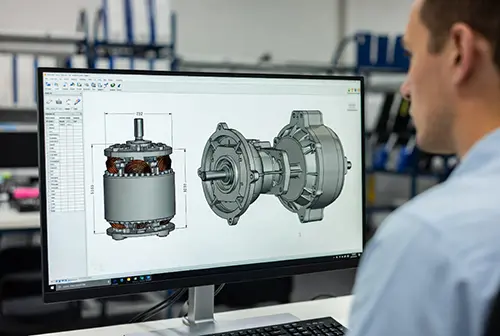
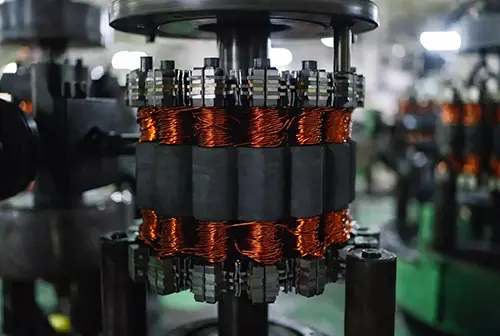
Once requirements are confirmed, engineers develop a motor architecture suitable for the intended application.
Design activities may include:
Electrical Design
Engineers determine:
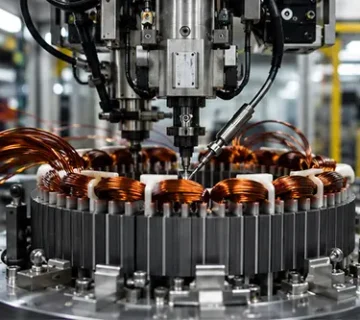
- Coil configuration
- Winding parameters
- Electrical insulation system
- Starting characteristics
- Power efficiency
Mechanical Design
Mechanical engineers optimize:
- Rotor geometry
- Stator dimensions
- Shaft design
- Bearing selection
- Housing configuration
- Fan balance
Each component affects overall performance, efficiency, vibration, and operating noise.
Material Selection
Selecting appropriate materials directly affects product reliability.
Common material categories include:
| Component | Typical Material Considerations |
| Rotor | Electrical steel and conductive elements |
| Stator | Laminated electrical steel with copper windings |
| Bearings | Precision rolling bearings |
| Shaft | Hardened steel |
| Housing | Steel or aluminum depending on design |
| Insulation | Heat-resistant electrical insulation materials |
Material selection is based on operating conditions, expected lifespan, manufacturability, and cost targets.
Design for Manufacturability (DFM)
Engineering extends beyond performance alone. Designs must also support efficient production.
Design for Manufacturability (DFM) helps reduce:
- unnecessary production complexity,
- assembly errors,
- material waste,
- production time,
- maintenance issues, and
- manufacturing costs while maintaining quality.
A design optimized for manufacturing enables more consistent production and easier scaling from prototype to volume manufacturing.
Step 3: Prototype Development
Before mass production begins, a prototype is typically manufactured to verify that the design meets the customer’s functional and engineering requirements. This stage helps identify potential issues early, reducing the cost and risk of changes after production has started.
Prototype evaluation commonly includes:
- Mechanical fit verification
- Electrical performance validation
- Airflow testing
- Noise assessment
- Thermal performance checks
- Durability evaluation
- Compatibility with the customer’s hood assembly
For OEM projects involving customized dimensions or performance targets, several prototype iterations may be completed before the final design is approved.
Objectives of Prototype Testing
| Objective | Benefit |
| Verify performance | Confirms the design meets specifications |
| Identify improvements | Allows engineering refinements before production |
| Reduce manufacturing risk | Prevents costly production errors |
| Validate assembly | Ensures compatibility with the customer’s product |
| Improve reliability | Confirms long-term operational performance |
Once prototype testing is complete and approved, the project moves into production planning.
Step 4: Production Planning
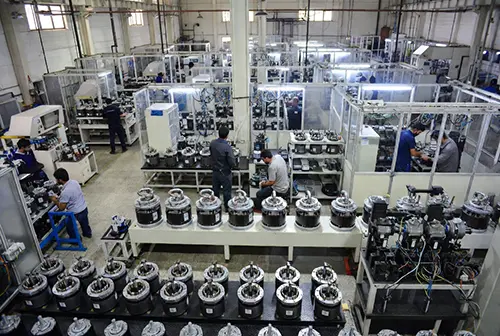
Production planning bridges engineering and manufacturing. During this phase, engineers and production teams define how the product will be manufactured consistently at scale.
Typical planning activities include:
- Bill of Materials (BOM) verification
- Production routing
- Process documentation
- Tooling preparation
- Work instruction development
- Quality checkpoint definition
- Production scheduling
- Supplier coordination
Effective production planning improves consistency while reducing lead times and minimizing production interruptions.
Step 5: Component Preparation and Inspection
A hood motor consists of multiple precision components that must meet defined dimensional and performance requirements before final assembly.
Key components include:
- Rotor
- Stator
- Shaft
- Bearings
- Housing
- Cooling fan or impeller
- Terminal assembly
- Thermal protection components
- Electrical wiring
Each component undergoes inspection before entering the assembly process, helping prevent defects from progressing through production.
Step 6: Motor Assembly
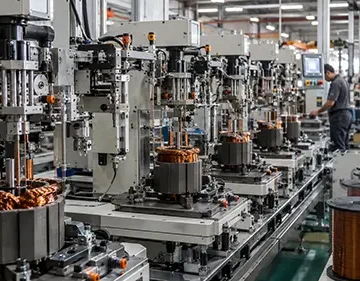
Motor assembly combines mechanical precision with electrical accuracy. Even small assembly variations can affect vibration, efficiency, operating temperature, and service life.
A typical assembly workflow includes:
- Stator preparation
- Rotor installation
- Bearing installation
- Shaft alignment
- Housing assembly
- Electrical connection
- Fan installation
- Mechanical fastening
- Preliminary inspection
Standardized assembly procedures help ensure product consistency across production batches.
Step 7: Quality Control Throughout Production
Quality assurance is not limited to the end of the production line. It is integrated throughout the manufacturing process to detect and address issues as early as possible.
Common quality checkpoints include:
Incoming Inspection
Raw materials and purchased components are inspected before entering production.
Typical inspections include:
- Material verification
- Dimensional measurements
- Bearing inspection
- Electrical component checks
In-Process Inspection
During assembly, technicians verify:
- Component positioning
- Mechanical alignment
- Torque requirements
- Electrical connections
- Assembly completeness
Final Inspection
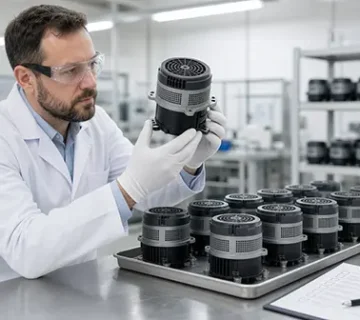
Before packaging, completed motors are inspected for:
- Visual quality
- Mechanical integrity
- Functional performance
- Product identification
- Packaging accuracy
This layered quality approach helps improve consistency while reducing the likelihood of defects reaching customers.
Step 8: Performance Testing
Every OEM project should include appropriate testing procedures based on the motor’s intended application.
Common verification tests include:
| Test | Purpose |
| Voltage Test | Verify electrical operation |
| Current Test | Measure electrical consumption |
| RPM Test | Confirm rotational speed |
| Airflow Test | Validate ventilation performance |
| Temperature Test | Evaluate thermal behavior |
| Noise Test | Measure acoustic performance |
| Load Test | Assess operating stability |
| Endurance Test | Evaluate long-term reliability |
Testing methods should follow verified engineering procedures appropriate to the product and applicable market requirements.
Thorough testing helps reduce the risk of failure modes such as bearing failure, rotor imbalance, and electrical insulation failure. For applicable motor designs, performance ratings and testing requirements can be evaluated with reference to IEC 60034-1 requirements for rotating electrical machines.
Step 9: Packaging and Shipment Preparation
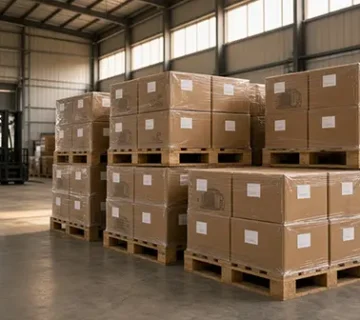
Packaging is an important part of product quality. Proper packaging protects motors during storage, handling, and international transportation.
Packaging considerations include:
- Moisture protection
- Shock resistance
- Product labeling
- Batch traceability
- Export packaging requirements
- Carton strength
- Pallet configuration
Well-designed packaging helps preserve product quality until installation.
OEM Customization Capabilities
OEM customers often require products that differ from standard catalog models. Customization may include:
- Voltage options
- Frequency compatibility
- Power ratings
- Shaft dimensions
- Mounting configurations
- Wiring harnesses
- Connector types
- Housing modifications
- Private-label branding
- Custom packaging
Early collaboration between the customer’s engineering team and the manufacturer helps ensure these requirements are incorporated efficiently into the design and production process.
Standard Hood Motor Platforms for Different Applications
Not every appliance manufacturer requires a fully custom motor developed from the ground up. Depending on the required dimensions, electrical specifications, mounting configuration, airflow targets, and intended application, an existing motor platform may provide a practical starting point for product evaluation.
Manufacturers looking for established motor configurations can review the KC Series hood motors as one of the available product series for specific kitchen ventilation applications. The suitability of a KC Series configuration should be evaluated according to the hood design, installation requirements, electrical specifications, and target operating conditions.
For applications requiring a different motor configuration or performance profile, the Turbo Series hood motors provide another product series that appliance manufacturers can evaluate. Final motor selection should be based on technical requirements such as dimensions, voltage and frequency, power characteristics, mounting configuration, and expected operating performance.
For a broader overview of available configurations and motor selection considerations, manufacturers can also explore the complete kitchen hood motor range before deciding whether an existing product platform or a custom OEM solution is the better fit for their project.
Common Challenges in OEM Hood Motor Manufacturing
OEM projects frequently involve challenges that extend beyond the motor itself.
| Challenge | Recommended Approach |
| Tight development schedules | Begin engineering collaboration early |
| Product consistency | Implement documented quality procedures |
| Design revisions | Validate changes through prototype testing |
| Supply chain disruptions | Plan material sourcing in advance |
| Noise reduction | Optimize component balance and assembly precision |
| Long-term reliability | Combine material selection with comprehensive testing |
Addressing these challenges during development reduces project risk and supports successful product launches.
Why Choose Namavaran Sanaye Arvin for OEM Hood Motor Manufacturing?
Selecting an OEM manufacturing partner is a strategic decision that affects product quality, supply continuity, and long-term brand reputation. Beyond manufacturing capability, an effective partner should offer engineering expertise, structured quality processes, and responsive technical collaboration throughout the product lifecycle.
Namavaran Sanaye Arvin (ElectroNasa) positions itself as an engineering-focused OEM manufacturer for kitchen hood motors, supporting customers from concept development through production and after-sales technical assistance. Based on the company’s verified information, its strengths include:
- In-house engineering support
- Dedicated hood motor manufacturing
- OEM and private-label production
- Quality-focused manufacturing processes
- Product customization
- Domestic supply and export-oriented cooperation capabilities
- Long-term cooperation with appliance manufacturers
For OEM brands, early collaboration with the manufacturer’s engineering team can help reduce development time, improve product compatibility, and streamline the transition from prototype approval to mass production.
Best Practices for a Successful OEM Project
The success of an OEM hood motor project depends on careful planning, technical communication, and continuous collaboration.
Consider the following best practices:
- Define clear performance specifications before design begins.
- Share installation drawings and operating conditions early in the project.
- Validate prototypes before approving production tooling.
- Establish measurable quality acceptance criteria.
- Maintain open communication during engineering reviews.
- Plan inventory and production schedules in advance.
- Review packaging requirements for export markets.
- Schedule regular quality and performance evaluations throughout production.
Following these practices helps reduce project risk and supports consistent manufacturing outcomes.
Conclusion
OEM hood motor manufacturing is a structured engineering process that extends well beyond component assembly. From requirement analysis and product design to prototype validation, quality control, and mass production, every stage contributes to the reliability and performance of the finished motor.
Manufacturers seeking a dependable OEM partner should evaluate technical capabilities, manufacturing processes, quality management, and engineering support—not just production capacity. A collaborative development process can improve product quality, reduce time to market, and support long-term business growth.
By combining engineering expertise with organized manufacturing and quality assurance, companies such as Namavaran Sanaye Arvin (ElectroNasa) help appliance brands develop hood motor solutions tailored to their technical and commercial requirements.
Frequently Asked Questions
What is an OEM hood motor?
An OEM hood motor is an electric motor manufactured according to another company’s specifications and branding. It is designed to meet the performance, dimensional, and quality requirements of the OEM customer’s kitchen hood products.
How long does OEM hood motor development take?
The development timeline depends on design complexity, prototype revisions, testing requirements, and production planning. Projects involving custom engineering generally require more time than standard product configurations.
Can OEM hood motors be customized?
Yes. Depending on project requirements, customization may include voltage, frequency, power output, shaft dimensions, mounting configurations, wiring, connectors, housing design, labeling, and packaging.
Why is prototype testing important?
Prototype testing verifies that the motor meets performance expectations before full-scale production begins. It helps identify design improvements, validate compatibility, and reduce manufacturing risks.
What quality tests are commonly performed?
Typical tests include electrical performance, rotational speed (RPM), airflow, temperature rise, noise, endurance, and mechanical inspection. The exact testing program depends on the application and customer requirements.
What industries use OEM hood motors?
OEM hood motors are primarily used by kitchen appliance manufacturers, private-label brands, industrial ventilation equipment producers, and distributors requiring customized motor solutions.
What should I consider when selecting an OEM manufacturer?
Evaluate engineering capabilities, quality management, production consistency, customization options, technical support, communication, and long-term supply reliability.
Can Namavaran Sanaye Arvin support international OEM projects?
Namavaran Sanaye Arvin supports domestic customers and can evaluate OEM cooperation opportunities for international buyers based on project requirements, technical specifications, and supply conditions.