How to Choose an Industrial Hood Motor Manufacturer: A B2B Supplier Guide
Supply chain disruptions and premature equipment failures are not mere inconveniences; they represent catastrophic operational risks for commercial kitchens, manufacturing facilities, and HVAC contractors. Selecting an industrial hood motor manufacturer requires looking past glossy catalogs to aggressively interrogate the engineering data, quality control protocols, and raw production capacity driving the assembly line.
An unreliable commercial hood motor supply chain introduces severe hidden costs—from premature stator degradation and bearing wear to non-compliant acoustic levels and rejected OEM prototypes. For procurement managers and B2B distributors, the margin between a highly profitable, hands-off installation and an endless cycle of warranty claims lies entirely in the rigor of your supplier vetting process.
This framework details the exact engineering and operational criteria required to evaluate range hood motor factories. By establishing strict benchmarks for R&D investment, capacity limits, and component integrity, your procurement team can bypass inferior assembly plants and establish a permanent partnership with a technically superior OEM hood motor manufacturer.
The Critical Role of an OEM Hood Motor Manufacturer
Sourcing a commercial kitchen exhaust fan motor from a third-party trading company rather than a direct Original Equipment Manufacturer (OEM) eliminates your engineering control. Many B2B buyers unknowingly contract with assembly houses that purchase off-the-shelf rotors, stators, and housings from disparate factories, piecing them together to fill shipping containers.
A true OEM hood motor manufacturer engineers the component from the raw materials up. They control the copper wire grading, the lamination stamping of the stator core, and the precise dynamic balancing of the rotor. This vertical integration allows for exact manipulation of torque curves, thermal thresholds, and acoustic outputs. For industrial kitchen consultants and HVAC engineers, partnering with an OEM means you are acquiring a specifically engineered prime mover designed for high static pressure environments, not a repurposed general-duty motor.
5 Essential Criteria for Vetting a B2B Ventilation Supplier
Procurement managers must audit potential partners across five distinct engineering and operational axes. Failing to verify any of these parameters introduces supply chain vulnerability.
2.1. Rigorous Quality Control (QC) and Automated Testing Protocols
Human inspection is insufficient for heavy-duty hood motor production. Standardized manufacturing requires automated, end-of-line testing for every unit. Your supplier must provide documentation on their testing parameters, including:
- Dielectric Withstand (Hi-Pot) Testing: Ensuring the stator winding insulation can handle voltage spikes without catastrophic shorting.
- Dynamic Rotor Balancing: Measuring the vibration velocity (mm/s). Poor balancing guarantees premature bearing failure and unacceptable noise levels.
- Thermal Overload Verification: Testing integrated thermal protectors to ensure the motor shuts down safely before stator epoxy degradation occurs during a locked-rotor event.
2.2. In-House R&D and Advanced OEM Customization
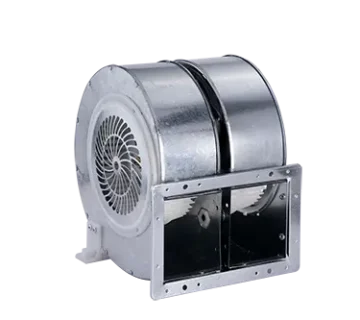
Standard wholesale commercial hood motors rarely fit bespoke industrial HVAC systems. A highly capable manufacturer maintains an active R&D department capable of rapid prototyping. Whether you require an extended shaft for a specific centrifugal exhaust fan motor, customized mounting brackets for a snail blower fan motor, or specialized IP ratings (e.g., IP55 or higher) to combat aggressive grease and moisture ingress, the supplier must demonstrate structural CAD capabilities and rapid tooling adaptation.
2.3. Scalable Production Capacity and Facility Standards
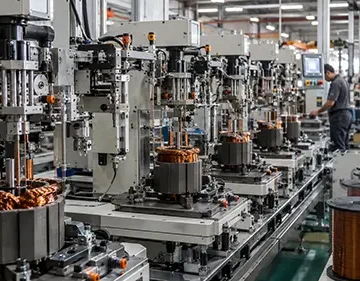
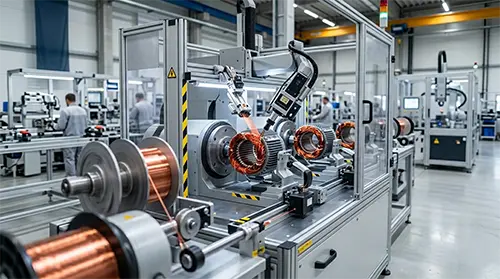
A factory’s ability to produce ten exceptional prototypes does not guarantee their ability to deliver 5,000 flawless units. Audit the factory’s automation level. Automated winding machines, precision CNC lamination stamping, and robotic varnish dipping lines ensure that unit #5,000 matches the exact industrial hood motor technical specifications of unit #1. Manual winding lines inevitably introduce tension variations in the copper coils, leading to inconsistent electromagnetic fields and variable operating temperatures.
2.4. Supply Chain Reliability and Predictable Lead Times
Manufacturing capacity is irrelevant if the factory cannot secure raw materials. The most reliable hood motor suppliers maintain strategic reserves of high-grade electrical steel, copper wire, and industrial bearings. Ask your prospective manufacturer about their raw material buffer inventory and their typical production cycle for high CFM exhaust motors. Predictable 30-to-45-day lead times are the industry benchmark for stable B2B ventilation suppliers.
2.5. Certifications and Industrial Compliance Standards
Uncertified motors present massive liability risks. Depending on the target market, the factory must demonstrate compliance with CE, RoHS, and ideally ISO 9001 quality management systems. Furthermore, evaluate the insulation class. For commercial kitchen applications where ambient temperatures frequently exceed 50°C, a Class F (155°C) or Class H (180°C) insulation system is non-negotiable to prevent premature electrical failure.
The Hidden Costs of Poor Manufacturing: Why Inferior Motors Fail
Procuring the lowest industrial hood motor price strictly to reduce upfront capital expenditure universally results in inflated backend operational costs. Cheaply manufactured units fail predictably and consistently.
- Bearing Degradation: Inferior manufacturers utilize unsealed or low-grade steel bearings. In an exhaust system, ambient grease and particulate matter bypass poor seals, destroying the bearing raceway. This leads to seizing and catastrophic mechanical failure.
- Stator Burnout: To cut costs, budget factories use aluminum wire coated in copper (CCA) or lower the gauge of pure copper. This creates higher electrical resistance, generating excess heat that melts the internal insulation varnish.
- Acoustic Non-Compliance: Unbalanced rotors and cheap housing materials create excessive vibration. A low noise industrial hood motor requires tight machining tolerances; without them, the resulting high decibel output often violates occupational noise regulations and ruins restaurant acoustic environments, forcing immediate replacement.
Routine restaurant industrial hood motor maintenance cannot reverse the damage of structural manufacturing defects. You will pay for the motor either on the purchase order or in emergency replacement labor.
Essential Technical Specifications to Demand from Your Supplier
Before finalizing a wholesale agreement, demand a comprehensive datasheet for the exact motor SKU. The documentation must clearly state:
- Insulation Class: Minimum Class F requirement for high-heat extraction.
- Ingress Protection (IP) Rating: Defines resistance to dust and fluid (grease/water).
- Bearing Specifications: Specify the exact brand and type (e.g., double-sealed C3 clearance bearings).
- Performance Curves: Detailed RPM vs. Torque and Airflow (CFM) vs. Static Pressure graphs.
- Duty Cycle: Must be rated for S1 (Continuous Duty) operation.
ElectroNasa: The Standard in Global B2B Motor Supply
Namavaran Sanaye Arvin, operating under the brand ElectroNasa, bridges the gap between precision engineering and scalable industrial manufacturing. Operating specifically to supply procurement managers, distributors, and factory owners, ElectroNasa eliminates the technical inconsistencies associated with standard OEM hood motor manufacturer selection.
By maintaining absolute control over the production environment—from raw copper procurement to automated stator winding and dynamic balancing—ElectroNasa produces commercial kitchen exhaust fan motors that consistently exceed international thermal and acoustic benchmarks.
Our engineering team works directly with B2B buyers to customize shaft lengths, mounting configurations, and performance curves, ensuring flawless integration into any centrifugal or snail blower architecture. When supply chain reliability, exact dimensional tolerances, and continuous-duty performance dictate your purchasing decisions, you can gain full transparency into our ElectroNasa manufacturing process, where we provide the verifiable data and manufacturing horsepower required to scale your operations.”
Supplier Evaluation: Technical Comparison Table
To contextualize the supply chain landscape, procurement teams must evaluate their options against strict industrial parameters. The following matrix contrasts ElectroNasa against typical sourcing alternatives.
| Evaluation Metric | ElectroNasa (Direct OEM Manufacturer) | Generic Overseas Assembly Factories | High-End US/European Manufacturers |
| Quality Control (QC) | 100% Automated End-of-Line Testing (Hi-Pot, Dynamic Balancing, Thermal). | Random batch sampling; manual inspection; high defect variance. | Rigorous, automated end-of-line testing. |
| R&D & Customization | Advanced in-house CAD, rapid prototyping for bespoke RPM/Torque curves. | Extremely limited; off-the-shelf standardized components only. | High capability, but strictly gated behind massive minimum order quantities (MOQs). |
| Supply Chain & Lead Times | Predictable 30-45 days; strategic raw material buffer inventories. | Highly volatile (60-120 days); dependent on third-party component availability. | Stable, but frequently delayed by global shipping bottlenecks depending on region. |
| Cost Efficiency | Optimal B2B margin; direct factory pricing eliminating middleman markups. | Lowest upfront cost; highest hidden operational and replacement costs. | Premium pricing; significant capital expenditure required per unit. |
| B2B Engineering Support | Direct consultation with motor engineers; dedicated technical datasheets. | Handled by sales representatives lacking mechanical engineering backgrounds. | Comprehensive support, often with slow response times for non-enterprise accounts. |
| Stator & Bearing Quality | Pure copper windings; C3 clearance double-sealed industrial bearings. | Copper-Clad Aluminum (CCA) risk; unsealed carbon steel bearings. | Pure copper windings; premium SKF or NSK bearings. |
Frequently Asked Questions (FAQ)
1.What is the difference between an OEM hood motor and a generic wholesale motor?
An OEM (Original Equipment Manufacturer) engineers and produces the motor from raw materials, controlling the stator winding, rotor balancing, and thermal tolerances. A generic wholesale motor is typically assembled from disparate, off-the-shelf parts by a trading company, resulting in unpredictable performance and lifespan.
2.How does stator insulation class affect industrial exhaust fan lifespan?
Commercial kitchens generate severe ambient heat. A Class F (155°C) or Class H (180°C) insulation rating ensures the epoxy varnish on the copper windings does not melt under high thermal loads. Lower classes (like Class B) will rapidly degrade, causing stator burnout and total motor failure.
3.Why is dynamic rotor balancing critical for commercial kitchen motors?
Imperfectly balanced rotors generate radial vibration. Over time, this vibration destroys the motor bearings and transmits acoustic resonance through the ductwork. Precise dynamic balancing ensures a low noise industrial hood motor and significantly extends mechanical longevity.
4.What causes a commercial hood motor to burn out prematurely?
The primary culprits are restricted airflow causing thermal overload, water/grease ingress shorting the electrical components (due to inadequate IP ratings), and high-resistance windings (often from budget CCA wire) generating excess internal heat.
- Can an industrial hood motor be customized for specific CFM requirements?
Yes, provided you partner with a capable manufacturer. ElectroNasa can manipulate the copper winding patterns, lamination stack length, and rotor design to achieve precise RPM and torque curves, dictating the exact Cubic Feet per Minute (CFM) output required for your HVAC architecture.
- What is the standard lead time for wholesale commercial hood motors?
A reliable factory operating with strategic raw material reserves should fulfill industrial orders within a 30 to 45-day production cycle. Lead times extending beyond 60 days often indicate a reliance on third-party component suppliers.
- How do I evaluate the quality control of a motor manufacturing factory?
Demand documentation on their automated testing infrastructure. A qualified supplier must perform 100% dielectric withstand (Hi-Pot) testing, vibration analysis, and thermal protector verification on the assembly line before palletization.
- What IP rating is required for restaurant exhaust fan motors?
At a minimum, motors exposed to commercial kitchen environments require an IP55 rating. This designates robust protection against dust ingress and resistance to low-pressure water jets, safeguarding the internal electronics from airborne grease and cleaning procedures.
- Why should procurement managers avoid trading companies for motor supply?
Trading companies act as intermediaries. They inflate the industrial hood motor price while offering zero engineering control or reliable warranty support. When mechanical failures occur, accountability is untraceable.
- Does ElectroNasa provide technical datasheets for their centrifugal fan motors?
Absolutely. We provide comprehensive engineering documentation, including performance curves, dimensional CAD drawings, bearing specifications, and insulation classifications for every B2B order.
Securing a reliable supply chain requires partnering with manufacturers who prioritize engineering integrity over mass assembly. Do not let inferior components compromise your commercial installations or your brand’s reputation.
For technical consultation, custom prototype development, or wholesale pricing inquiries regarding high-efficiency industrial hood motors, engage directly with our engineering team.
Contact ElectroNasa Engineering & B2B Sales
Technical Standards & Compliance References
To ensure operational excellence and safety, our manufacturing and testing protocols adhere to the following global industrial standards:
-
Commercial Kitchen Ventilation: We design our systems in accordance with ASHRAE Standard 154, which establishes the requirements for ventilation systems in commercial cooking operations.
-
Motor Insulation & Protection: Our motors are rated based on NEMA MG 1 Standards, covering critical insulation classes and enclosure types to ensure durability in harsh industrial environments.
-
Quality Management Systems: Our facility operates under the ISO 9001:2015 Certification, ensuring consistent quality management and continuous improvement in all manufacturing processes.
-
Dielectric Testing Methodologies: Performance and safety validation are conducted using IEEE 43-2013 Standards, the industry benchmark for insulation resistance and dielectric withstand (Hi-Pot) testing.
-
Workplace Safety & Noise Control: Our low-vibration engineering is aligned with OSHA Occupational Noise Exposure Standards, mitigating acoustic risks and maintaining safe decibel levels in industrial kitchen environments.